How to Choose a Bicycle Saddle Manufacturer for Your Brand
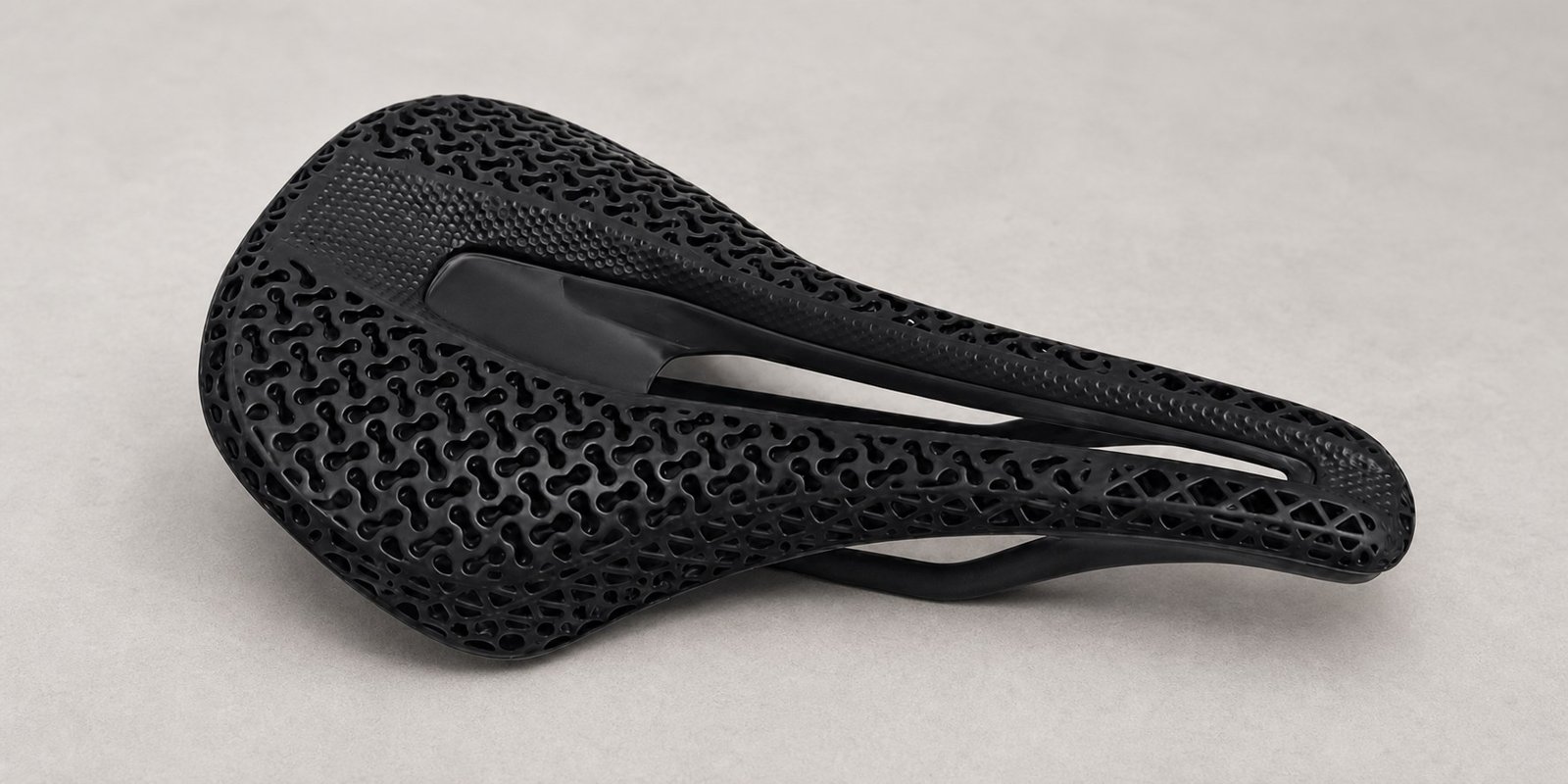
The right bicycle saddle manufacturer does more than quote a unit price. It helps determine whether your product can meet its target rider, price position, launch schedule, and repeat-order requirements.
That matters because a saddle is both a technical component and a highly personal contact point. A model may look strong in a catalogue yet still be wrong for the intended rider, sales channel, or product tier. Likewise, a good first sample does not automatically prove that the same specification and finish can be maintained through bulk production and future orders.
For bicycle brands, distributors, bike manufacturers, and private-label sellers, the better approach is to evaluate the supplier as a development and production partner. This guide explains what to compare before requesting samples or committing to an order.
If a lattice-based platform is part of the shortlist, the available 3D printed saddle platforms show how model geometry, base, and rail options are usually presented at this stage.
1. Define the Product Brief Before Comparing Manufacturers
A manufacturer can only recommend a relevant direction when the commercial brief is clear. Before contacting suppliers, define what role the saddle will play in your product line.
Your initial brief should cover:
- Target rider and riding discipline
- Bicycle category and riding position
- Intended retail or wholesale price band
- Expected first-order quantity
- Preferred saddle width and shape
- Weight target
- Shell and rail preferences
- Conventional foam, gel, or 3D printed cushioning
- Branding and packaging requirements
- Target sampling and launch dates
- Countries and sales channels
A performance road saddle, a gravel endurance platform, and an upright e-bike saddle require different geometry, cushioning, materials, and cost structures. Sending the same generic request for “a good bicycle saddle” to several factories usually produces quotations that cannot be compared meaningfully.
A capable supplier should ask about the intended rider, market position, and channel before recommending a model. If the discussion starts and ends with price, important product decisions are probably being left unresolved.
2. Check Whether the Factory Fits Your Saddle Category
Not every bicycle saddle factory has the same strengths. Some focus on high-volume conventional saddles; others are better suited to lightweight carbon platforms, comfort products, or 3D printed lattice structures.
Review the supplier’s current range and manufacturing capability, then ask:
- Does it already produce saddles for your target discipline?
- Are suitable base platforms available, or is new tooling required?
- Can it support both conventional and 3D printed construction?
- Which shell, rail, cover, foam, gel, and lattice options are available?
- Can a platform support multiple widths or material configurations?
- Is the proposed model appropriate for your price and channel?
Starting with a proven platform can reduce development time and tooling risk. Deeper customization may be appropriate when geometry, structure, or market positioning must be distinctive.
The manufacturer should also distinguish an existing-model private-label program from a development-led OEM project. Adding a logo and retail box to an existing saddle is different from changing the shell, rail interface, cushioning map, or overall geometry.
3. Evaluate Construction and Material Capability
Saddle specifications are interconnected. A change in rail material affects weight, cost, product position, and clamp requirements. A wider shell may require different reinforcement. A cover material that looks premium may behave differently under abrasion, moisture, or repeated use.
When comparing suppliers, look beyond a simple material list.
Shell and Rail Systems
The shell affects support, flexibility, weight, and structural behavior. Depending on the project, options may include nylon composite, carbon-reinforced construction, or full carbon.
CrMo, manganese, and carbon rails serve different product tiers. Confirm construction, dimensions, compatibility, and intended use rather than relying only on a material name.
Cushioning and Surface
Conventional saddles may use different foam densities, gel zones, cover materials, and surface finishes.
A 3D printed saddle introduces additional questions about lattice structure, density mapping, pressure zones, cleaning, and batch consistency.
Finishing and Assembly
Edge treatment, bonding, rail alignment, logo application, surface consistency, and packaging presentation all affect the perceived quality of the finished product.
A manufacturer should be able to explain why a proposed construction suits the rider, price tier, and channel—not simply list the materials it can supply.
4. Compare Existing Platforms Before Starting New Tooling
Many brands do not need to begin with a completely new saddle. A suitable base platform can often be adapted through rail selection, color, surface finish, logo placement, and packaging.
An existing platform may be the better route when:
- The project has a fixed launch window
- The first order does not justify new tooling
- The brand wants to test a category before expanding it
- A proven geometry already matches the target rider
- Differentiation can be achieved through configuration and presentation
New development becomes more relevant when current platforms cannot meet the required geometry, technical specification, or product-line role.
A reliable supplier should help identify which changes create meaningful value and which add cost without improving the commercial result.
5. Use Sampling as a Controlled Approval Stage
A sample is not only a sales presentation. It should become the documented reference for the configuration that may proceed to production, and it should sit within a defined OEM bicycle saddle process.
Before sampling, confirm the exact model, dimensions, construction, expected weight range, color, branding method, packaging format, sample cost, and preparation time. Clearly separate standard details from project-specific changes.
When the sample arrives, review:
- Dimensions and weight
- Shell, rail, and component alignment
- Cushioning or lattice configuration
- Surface and edge finishing
- Color and logo execution
- Packaging presentation
- Suitability for the intended rider and channel
Record requested revisions instead of relying only on informal messages. Bulk production should not begin while specifications, artwork, colors, packaging, or approval references remain unclear.
6. Understand the Commercial Order Structure
MOQ is often presented as one number, but buyers also need to understand how the order can be divided.
Confirm whether MOQ applies per:
- Model
- Color
- Logo
- Rail or material configuration
- Size
- Packaging design
For example, an MOQ of 100 pieces does not necessarily mean that the quantity can be divided freely among multiple models, colors, and packaging versions.
Lead time should also be separated into sample preparation, sample approval, artwork confirmation, bulk production, inspection, and shipment preparation. Ask which conditions must be completed before the production clock begins.
Branding and packaging belong in the same commercial discussion. Confirm the logo method, artwork format, color feasibility, packaging MOQ, labels, barcode requirements, inserts, and carton markings before approving the final quotation.
7. Examine Quality Control and Repeat-Order Consistency
The first sample receives close attention. The harder question is whether the same product can be controlled during bulk production and later repeat orders, which is why quality control and production consistency deserve direct review.
Ask the supplier to explain how it handles:
- Incoming material verification
- Dimensional and assembly checks
- Rail alignment and bonding inspection
- Surface, color, and logo confirmation
- Weight monitoring
- Packaging and labeling review
- Final shipment inspection
Also ask which references are retained for future production. Approved specifications, material records, color references, artwork, packaging files, and sample records can reduce uncertainty when a product is reordered months later.
No responsible manufacturer should promise that every unit will be visually identical in every respect. It should explain tolerances, inspection methods, approval references, and how deviations are handled.
8. Evaluate Communication, Evidence, and the Final RFQ
Manufacturing capability is difficult to use without clear project communication. During quotation and sampling, observe whether:
- Answers refer to the exact model and configuration
- Assumptions are identified rather than treated as confirmed facts
- Changes are recorded in writing
- Artwork and specifications are version-controlled
- MOQ and timing are explained with their conditions
- Responsibilities are clear before production
Look for evidence behind general claims such as “stable quality” or “strong production capability.” Useful evidence may include factory photographs, material specifications, inspection checkpoints, packaging examples, sample records, drawings, and available test information.
Once potential suppliers have been screened, send each finalist the same RFQ. Include:
- Company and target market
- Rider segment and bicycle category
- Product-line position
- Reference model or target specification
- Required quantity
- Material preferences
- Branding and packaging requirements
- Sample request
- Target launch date
- Market-specific documents or labels
Compare the complete proposals rather than unit price alone. A lower quotation may use a different construction, exclude packaging, assume a higher MOQ, or leave important specifications unresolved.
Bicycle Saddle Manufacturer Checklist
Before selecting a supplier, confirm:
- Its platforms match the required saddle category.
- It understands the target rider and product-line position.
- Materials and construction are clearly specified.
- OEM and private-label scopes are distinguished.
- Sample requirements and approval steps are documented.
- MOQ rules and order splits are understood.
- Production timing is broken into realistic stages.
- Quality-control checkpoints are explained.
- Repeat-order references will be retained.
- Branding and packaging requirements are confirmed.
- Revisions and responsibilities can be controlled in writing.
- The final quotation is comparable with other suppliers.
Frequently Asked Questions
What is the difference between an OEM bicycle saddle and a private-label saddle?
A private-label project usually begins with an existing platform and adapts branding, color, configuration, and packaging. An OEM development project may involve deeper changes to geometry, shell structure, cushioning, materials, or tooling.
Should a new brand start with an existing saddle model?
Often, yes. An existing platform can reduce development time, tooling cost, and technical risk. Custom development becomes more relevant when the brand requires geometry or construction that existing models cannot provide.
What should buyers check on a bicycle saddle sample?
Check dimensions, weight, construction, component alignment, surface finish, cushioning, branding, color, packaging, and suitability for the intended rider and channel. Record all requested changes before bulk approval.
What is a typical bicycle saddle MOQ?
MOQ varies by saddle type, model, material, customization, and packaging. Confirm whether it applies per model, color, size, configuration, logo, or packaging design.
How long does bicycle saddle production take?
Timing depends on the platform, development scope, sampling, artwork, packaging, and revisions. Confirm sample and bulk-production lead times separately and identify when each timeline begins.
Choose the Manufacturer Around the Product Brief
The right manufacturer is not simply the factory with the longest catalogue or the lowest initial quote. It is the partner whose platforms, materials, development process, quality controls, communication, and order structure align with the product your brand is trying to build.
Begin with a clear brief. Compare suppliers against the same requirements. Use samples as controlled approval references, and confirm specifications, packaging, MOQ, timing, and quality expectations before production.
SPROKETO develops 3D printed and conventional bicycle saddles for cycling brands, distributors, bike manufacturers, and private-label partners.
If you are evaluating a new saddle program, share your target market, rider category, expected quantity, branding requirements, target price range, and launch timing.
Start Your Bicycle Saddle Project.
If you are specifically evaluating suppliers in China, our 12-question pre-sample OEM saddle supplier checklist covers factory identity, sampling, testing, quality control, and production responsibility in more detail.