What 3D Printed Bicycle Saddle Customizations Require New Tooling?
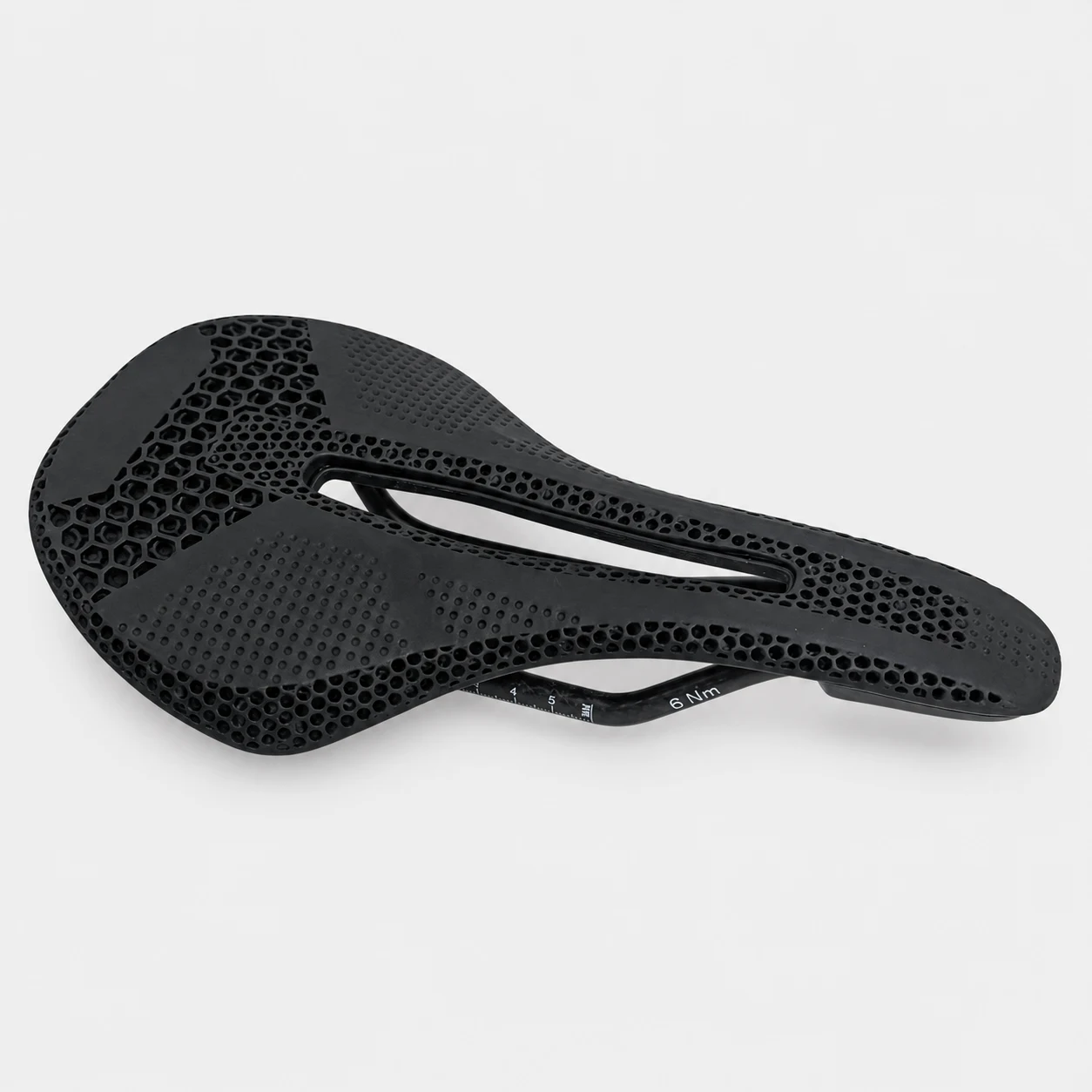
Not every 3D printed bicycle saddle customization requires new tooling.
Branding, packaging and some model-supported configuration changes may be possible on an existing saddle platform. Changes to the shell, geometry, rail interface or certain lattice specifications may require new development, tooling, samples and validation.
The difficult part is that “custom saddle” can describe several very different projects.
One buyer may only need a logo and retail box. Another may want to change the rail, saddle width, lattice firmness and shell shape. These projects should not be quoted, sampled or scheduled in the same way.
For an OEM buyer, the first question should therefore be:
Can the requested product be created from an existing platform, or does the change affect the structure that defines the saddle?
The answer determines more than tooling cost. It can also affect minimum quantities, sample preparation, development time, testing scope and the approved reference for bulk production.
Quick Answer: Three Levels of Saddle Customization
Most bicycle saddle projects fall into one of three development levels.
| Development level | Typical scope | New structural tooling |
|---|---|---|
| Private-label customization | Logo, labels, packaging and model-supported colors | Usually less likely |
| Existing-platform modification | A supported rail option, upper specification, material direction or other platform-compatible change | Depends on the model and manufacturing process |
| New product development | New shell geometry, width, rail interface, connection structure or proprietary shape | Often required |
These categories are a starting point, not a universal factory rule. The same requested change may be simple on one saddle platform and structurally significant on another.
It is also important to separate four different requirements:
- New tooling — a new mold, fixture or other production tool.
- New production data — revised digital geometry, lattice data or process settings.
- New samples — physical products needed to approve the revised configuration.
- New validation — additional dimensional, functional or structural checks.
A change that does not require a new structural mold may still require engineering work, a revised sample and written approval.
What Can Usually Be Customized on an Existing Platform?
An existing platform is normally the fastest starting point when its geometry, base and rail structure already fit the product brief.
The following changes may be possible without developing a completely new saddle structure. Their availability still needs to be confirmed for the selected model.
Logo Application
Logo options may include a mark on the underside, rail area, label or packaging. The appropriate method depends on the available surface, material, logo size and expected appearance.
A logo applied to an existing surface is different from a logo built into the shape of the shell or 3D printed upper. The first may use the existing product structure. The second may require revised design data or dedicated development.
Before sampling, confirm:
- logo file format;
- size and placement;
- color and contrast;
- application method;
- whether the logo affects the product structure;
- acceptable appearance on the finished sample.
Packaging, Labels and Barcodes
Retail boxes, hang tags, product labels, barcode labels, inserts and carton marks do not normally change the saddle structure.
They can still affect the commercial project. Packaging suppliers may have their own minimum quantities, artwork requirements and preparation times. A product MOQ and a printed-packaging MOQ are not necessarily the same.
Buyers should approve the packaging artwork, product label and carton information separately from the saddle sample.
Model-Supported Colors
A color change may be possible when the selected material and production process support it. That does not mean every color is available at every quantity.
Color feasibility may depend on:
- material availability;
- production batch size;
- minimum material preparation;
- color tolerance;
- the base, upper and rail finish;
- whether several colors are being divided within one order.
Use a physical color reference or agreed color standard where appropriate. Screen images alone are not a reliable production reference.
Existing Rail Options
Some saddle platforms may support more than one rail direction. This must be confirmed against the base structure and rail-to-shell interface.
Changing from a round metal rail to an oval carbon rail is not only a material change. Rail dimensions affect seatpost-clamp compatibility. A 7 × 7 mm round rail and a 7 × 9 mm oval rail may require different clamp hardware.
The buyer should confirm:
- rail material;
- rail cross-section;
- rail geometry;
- compatible seatpost clamp;
- target weight;
- whether the revised structure is covered by existing test evidence.
Do not assume that a cheaper or lighter rail can be substituted without affecting the complete product.
Customization–Tooling Decision Matrix
The table below provides a practical starting point. It does not replace a model-specific engineering review.
| Requested change | Existing platform may be possible? | New sample? | New tooling or development may be required? | Main point to verify |
|---|---|---|---|---|
| Logo on an existing base or label area | Often | Yes | Usually limited | Method, position and appearance |
| Custom packaging or barcode label | Yes | Packaging sample recommended | Packaging setup may apply | Packaging MOQ and artwork |
| Model-supported color | Often | Yes | Material or color setup may apply | Availability and tolerance |
| Supported rail option | Sometimes | Yes | Depends on base and rail interface | Compatibility and test scope |
| Embedded logo in the 3D upper | Depends | Yes | Revised design or upper-production tooling may apply | Lattice integrity and appearance |
| Lattice thickness, firmness or zoning change | Depends | Yes | Revised data, process development or tooling may apply | Target, repeatability and validation |
| New saddle width or profile | Less likely | Yes | Often | Shell geometry and tooling |
| New shell or base geometry | Usually no | Yes | Usually | Structure, tooling and testing |
| New rail-to-shell connection | Usually no | Yes | Usually | Structural verification |
| Completely proprietary saddle shape | No | Multiple stages | Yes | Full development scope |
The most important wording in this matrix is may apply.
“3D printed” does not identify one universal production process. A supplier should explain whether a requested change affects digital design, printing preparation, a molded structural component, an assembly fixture or the complete validation plan.
Which Changes May Require New Tooling or Engineering?
Customization becomes a development project when the requested change affects the geometry or structure that the production process is designed to reproduce.
Changing the Shell or Base Geometry
The shell or base supports the rider and connects the upper to the rails. A change to its width, length, profile, relief area, mounting feature or structural geometry may require new tooling.
This is different from placing a logo on an existing base.
A new base may also affect:
- rail position;
- support and flex characteristics;
- assembly;
- complete weight;
- compatibility with the upper;
- structural test scope.
For that reason, a buyer should not describe a new shell as a “small appearance change.”
Creating a New Width or Saddle Profile
A new width is not always a simple scaling exercise.
Changing the width or profile may alter the support area, shell curvature, rail relationship and upper geometry. Even when two versions look similar, they may require separate drawings, samples and production controls.
Before requesting a new size, define:
- intended bicycle category;
- target rider and riding position;
- overall width and length;
- profile and rear support area;
- nose shape;
- central relief;
- rail position;
- target complete weight.
These inputs help determine whether an existing platform is suitable or whether a new structural direction is needed.
Revising the 3D Printed Upper
A 3D printed upper can provide more design freedom than a conventional foam pad, but design freedom is not the same as unlimited, instant customization.
Changes may involve:
- overall upper thickness;
- lattice geometry;
- zonal characteristics;
- surface texture;
- edge geometry;
- nose and rear-area transitions;
- an embedded logo or proprietary pattern.
Depending on the actual production method, a change may require revised digital files, new process preparation, dedicated upper tooling, additional samples or a new production reference.
An OEM brief should explain the required outcome instead of asking only for a “softer” or “more comfortable” lattice. Useful inputs include the target rider, intended application, area to be changed, current sample feedback and the reason for the modification.
Comfort and pressure claims should not be inferred from lattice appearance alone. Any claimed performance improvement needs evidence relevant to the final configuration.
Changing the Rail Interface
The rail and base work as a structural system. A change to rail material, cross-section, geometry or connection method may create a materially different saddle configuration.
It may affect:
- seatpost compatibility;
- rail position;
- weight;
- assembly;
- static-strength and fatigue evaluation;
- the applicability of an existing test report.
If a test report covers one rail and base configuration, do not automatically use it as evidence for a different construction.
Why 3D Printing Does Not Make the Complete Saddle Tooling-Free
The visible lattice is only one part of the finished saddle.
3D printed upper + shell or base + rails + connection and assembly + branding and packaging = finished OEM saddle
The upper may be produced from digital geometry without a traditional shape-specific cushioning mold, depending on the process. The shell, rail interface and other structural components may use different production methods.
This creates an important distinction:
A 3D printed upper may reduce tooling requirements for one component, but it does not automatically eliminate tooling for the complete saddle.
Even a digitally modified upper may still require:
- design work;
- process preparation;
- material planning;
- physical samples;
- dimensional and appearance approval;
- repeatability checks;
- revised production records.
Buyers should therefore ask suppliers to separate the quotation into clear categories:
| Cost or work area | What to clarify |
|---|---|
| Product | Existing model or new structure |
| Design | Revised drawing, upper data or geometry |
| Tooling | Mold, fixture or dedicated production tool |
| Sampling | Number and purpose of samples |
| Testing | Existing evidence or additional evaluation |
| Unit price | Exact approved configuration |
| Packaging | Standard or custom packaging |
| Delivery | Sample and production timing |
This is more useful than asking one general question: “Is there a mold fee?”
How Structural Changes Affect Testing and Approval
A cosmetic change and a structural change should not pass through the same approval process.
For example:
- a packaging artwork change does not alter the saddle structure;
- a logo applied to an existing non-structural area may mainly require appearance approval;
- a new rail, base or rail connection may affect the structural configuration;
- a new shell geometry may require a broader development and validation review.
The buyer should ask:
- What exact configuration was tested?
- Does the planned product match that configuration?
- Which change has been introduced?
- Could the change affect structure or compatibility?
- What additional verification is required before production?
A test report should be linked to the model, construction and applicable test conditions. It should not be treated as a general certification badge for every customization.
What Should a Buyer Send for an Accurate Customization Review?
A supplier cannot accurately assess tooling from the word “custom.”
Send a short customization brief containing:
Target saddle or reference model
Identify the existing platform, competitor reference or product direction.Requested changes
Mark the exact areas to be changed. Separate branding, packaging and structural requests.Dimensions or drawings
Provide target width, length, profile and other critical dimensions where relevant.Logo artwork
Send a vector file and indicate preferred location, size and color.Color direction
Provide a physical reference or color standard where possible.Rail requirements
State the preferred material, cross-section and intended seatpost interface.Target application and rider
Explain whether the saddle is intended for road, gravel, endurance, MTB, urban or e-bike use, together with the intended product position.Weight and price positioning
Give a realistic target rather than asking for the lowest weight and lowest price simultaneously.Packaging requirements
Specify retail box, hang tag, label, barcode and carton-mark needs.Expected quantity and launch timing
Include the first order, expected repeat demand and target launch date.Testing and market requirements
Identify the destination market and any buyer-specific documentation or test requirements.
A useful request could read:
We are evaluating an existing 3D printed saddle platform for a premium endurance line. We want to retain the current shell geometry, review a CrMo rail option, add our logo to the underside and develop retail packaging. Please confirm which changes are supported by the platform, what needs to be sampled and whether any additional tooling or validation would apply.
That is much easier to evaluate than:
Please quote a fully customized 3D saddle.
Use the Least Complex Development Route That Meets the Product Requirement
New tooling is valuable when a brand needs a geometry, structure or product identity that existing platforms cannot provide. It is not automatically evidence of a better saddle.
Starting from an existing platform is often more practical when:
- the geometry already fits the product brief;
- launch timing matters;
- the brand is entering the category for the first time;
- differentiation can be achieved through a supported configuration, branding and packaging;
- the initial volume does not justify a fully proprietary structure.
New development becomes more relevant when:
- no existing shell fits the target geometry;
- the brand requires a proprietary width, profile or relief concept;
- the rail interface or connection structure must change;
- the upper requires a product-specific structural direction;
- exclusivity and product ownership justify the additional investment.
The correct decision is not “custom or standard.”
It is:
Which parts of the product must be unique, and which parts can remain on an approved existing platform?
Technical References
- Park Tool: How to Remove and Install a Bike Saddle — installation guidance for saddle rails and seatpost clamps.
- 3D-Printed Bicycle Saddle — US20260035047A1 — an example of lattice-zone design parameters, not a SPROKETO patent, an industry standard or evidence of SPROKETO product performance.
Discuss Your Customization Scope With SPROKETO
If you are evaluating a 3D printed saddle project, send us:
- the reference saddle or preferred SPROKETO model;
- marked images showing the requested changes;
- target dimensions and rail direction;
- logo and color requirements;
- packaging needs;
- estimated quantity;
- target market and launch timing.
SPROKETO can review whether the project can start from an existing platform or requires additional development, tooling, samples or validation.
Next steps: View 3D Printed Saddle Platforms · Review the OEM Process · Start a Project