How Bicycle Brands Should Evaluate 3D Printed Bicycle Saddle Samples Before Bulk Orders
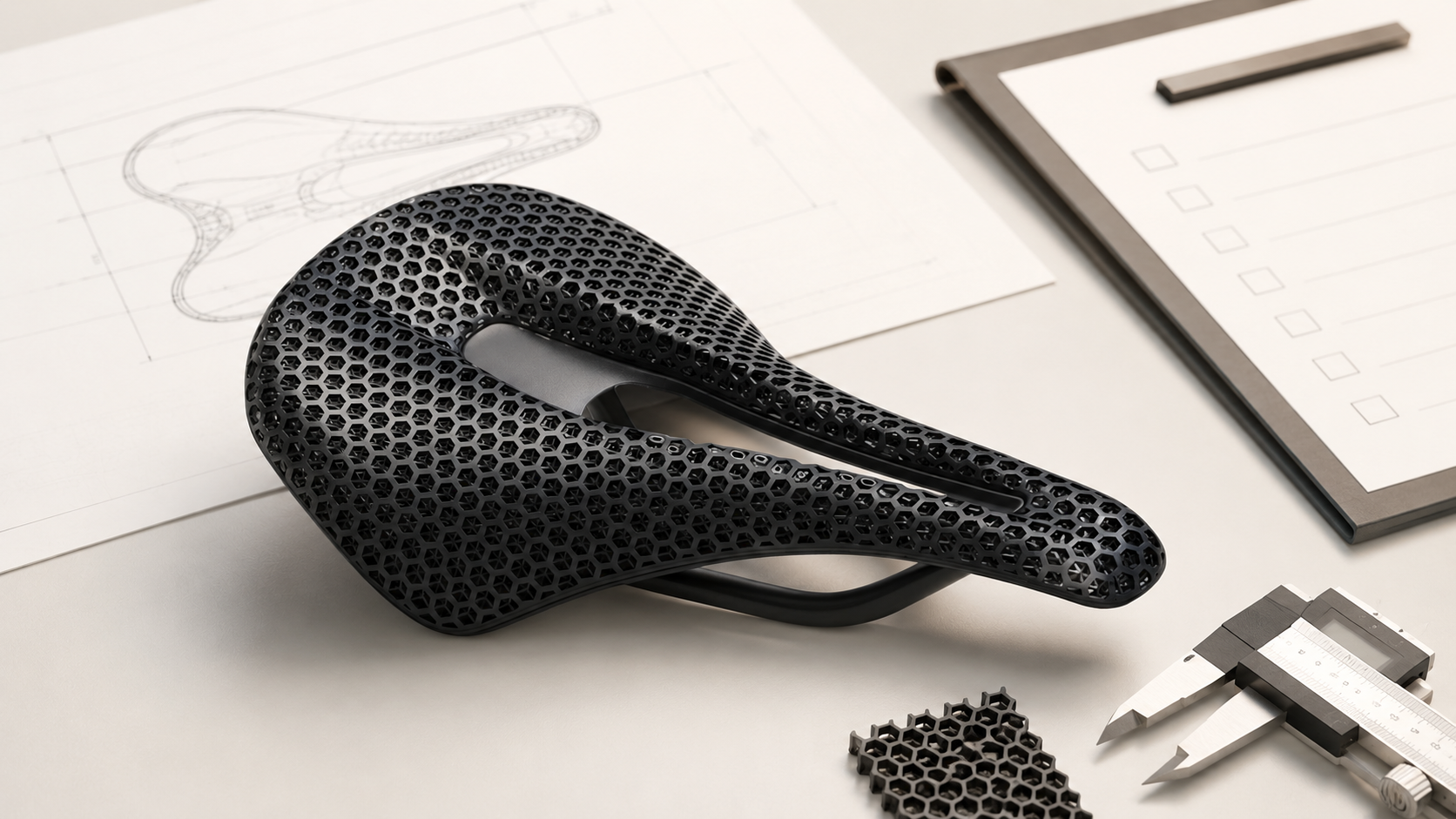
For bicycle brands, distributors, and private-label buyers, ordering 3D printed bicycle saddle samples is not only about checking whether a product looks good in photos.
A sample is the first real opportunity to understand whether a saddle fits your product line, rider segment, price tier, and sourcing expectations. Before moving into bulk orders, brands need to evaluate the sample from both a product perspective and a commercial perspective. This is especially important when reviewing MOQ, sampling, and lead time expectations for a new saddle program.
A 3D printed saddle may look premium at first glance, but the real questions are more specific:
- Does it match the intended rider and use case?
- Is the geometry suitable for your product line?
- Is the lattice structure consistent and clean?
- Are the rails, base, and underside details production-ready?
- Can the supplier maintain sample-to-bulk consistency?
- Does the product support your branding, packaging, and launch plan?
This guide explains how bicycle brands should evaluate 3D printed bicycle saddle samples before placing a bulk order.
Why Sample Evaluation Matters Before Bulk Orders
3D printed bicycle saddles are usually positioned as premium or upgraded products. They are often used by brands that want to improve comfort, product differentiation, and perceived value in a higher-end saddle line.
Because of that, sample evaluation should not be treated as a simple "approve or reject" step.
A good sample review helps a brand answer three important questions.
First, whether the model is suitable for the target rider. A saddle for road racing, endurance riding, urban commuting, or e-bike use may require different geometry, support characteristics, width, and riding feel.
Second, whether the product is realistic for the intended price tier. Some models may look attractive but may not fit the brand's target retail price, channel margin, or bulk order plan.
Third, whether the supplier can support repeatable production. A sample is only valuable if the bulk order can stay close to the approved version in structure, finish, weight range, and overall quality.
For this reason, brands should evaluate samples with both product teams and sourcing teams involved.
1. Check Whether the Saddle Matches the Intended Rider Segment
Before looking at small technical details, start with the most important question: who is this saddle for?
A 3D printed saddle should not be selected only because it looks modern. It should fit a clear rider segment or product-line role.
For example, a brand may need a saddle for:
- performance road bikes
- endurance road bikes
- gravel bikes
- commuter or urban bikes
- e-bikes
- premium aftermarket upgrades
- private-label accessory lines
Each use case may require a different balance of comfort, weight, shape, width, and price.
A lightweight racing-oriented saddle may not be the best option for a comfort-focused e-bike line. A wider, more supportive model may perform better for commuters but may not match a premium race-bike positioning.
When reviewing samples, brands should ask:
- Which rider segment is this model designed for?
- Is the saddle width suitable for the target customer?
- Is the riding position aggressive, neutral, or upright?
- Does the model support the brand's intended price tier?
- Would this saddle make sense in the existing product catalog?
The best sample is not always the most advanced model. It is the model that fits the product line most clearly.
2. Review Saddle Geometry, Size, and Fit Direction
Saddle geometry has a direct impact on comfort, appearance, and product positioning.
When evaluating a 3D printed bicycle saddle sample, brands should review:
- overall length
- saddle width
- nose shape
- rear support area
- center cut-out or pressure relief channel
- side profile
- rail position
- underside structure
Do not evaluate geometry only from a top-view photo. A saddle may look similar from above but feel very different in riding position because of side profile, rear support, and nose transition.
For B2B buyers, it is useful to compare the sample with existing saddle products in your line. This helps your team understand whether the new model is a direct replacement, a premium upgrade, or a completely new product direction.
If your brand already sells conventional saddles, compare the 3D printed sample against your current model in these areas:
- Is the width similar or different?
- Does it serve the same rider type?
- Is the saddle more performance-oriented or more comfort-oriented?
- Does the shape create a clear reason for customers to upgrade?
- Can your sales team explain the difference easily?
A sample should help your brand build a clear product story. If the geometry is difficult to explain, it may also be difficult to sell.
3. Inspect Lattice Consistency and Surface Finish
The lattice structure is one of the main reasons buyers are interested in 3D printed saddles.
However, brands should not only look at whether the lattice "looks premium." They should inspect whether the structure is clean, consistent, and suitable for production.
During sample review, check:
- whether the lattice pattern is even
- whether the surface has obvious defects
- whether edges are clean
- whether the pressure zones feel consistent
- whether the top surface has unwanted roughness
- whether there are visible irregularities in key support areas
A clean lattice structure improves both product appearance and buyer confidence. For premium saddle programs, visual consistency matters because end customers often judge the product quality immediately from close-up photos and physical inspection.
If possible, review several samples of the same model rather than only one piece. This gives your team a better understanding of production consistency.
For private-label projects, brands should also ask whether the same lattice finish can be maintained in bulk production. A beautiful sample is not enough if the bulk order varies too much in texture, color, or finish.
Brands comparing 3D printed bicycle saddle models should also consider whether the lattice design supports the intended rider segment, not only whether it looks visually advanced.
4. Check the Rail, Bonding Area, and Underside Structure
Many buyers focus heavily on the top surface of a 3D printed saddle, but the underside is just as important.
Before bulk orders, inspect:
- rail material
- rail size
- rail alignment
- bonding area
- underside base structure
- transition between top structure and base
- finishing around the rail connection area
For commercial buyers, rail and underside quality are especially important because they affect perceived durability and customer confidence.
A saddle may look excellent from the top, but if the underside appears unfinished, poorly aligned, or inconsistent, it may create concerns for distributors, dealers, or end users.
Brands should ask the supplier:
- What rail specification does this model use?
- Is the rail size compatible with the target market?
- How is the rail area inspected before shipment?
- Are there known limitations for certain seatpost clamps?
- What QC checks are used before packing?
These questions help reduce the risk of misunderstanding before bulk production.
5. Compare Sample Weight Against Product Positioning
Weight is important, but it should not be evaluated in isolation.
For some product lines, a lower saddle weight supports a premium or performance story. For other channels, comfort, durability, and price may matter more than the lowest possible weight.
When checking sample weight, brands should ask:
- Is the weight suitable for the intended price tier?
- Is the weight range stable enough for production?
- Does the buyer segment care more about weight or comfort?
- Would a slightly heavier model offer better support or value?
- Can the product page communicate the weight honestly?
A common sourcing mistake is choosing a sample mainly because it is light. That may work for a high-end road saddle, but it may not be the best choice for all riders or channels.
The better approach is to connect weight with product role. For example:
- road racing saddle: weight may be a major selling point
- endurance saddle: comfort and pressure distribution may matter more
- e-bike saddle: support and durability may be more important than ultra-low weight
- distributor product line: balanced price, comfort, and consistency may be more practical
The sample should support the commercial positioning of the product, not only impress the sourcing team.
For brands building a premium performance range, the WKL-2401 lightweight 3D printed saddle can be evaluated as a higher-end platform, while other models may be better suited to broader channel programs.
6. Test Comfort Feedback in Realistic Riding Scenarios
Comfort testing should be realistic, not casual.
A quick hand press or short showroom test is not enough to judge a 3D printed saddle. Brands should test samples in conditions that match the intended use case.
For example:
- road models should be tested in road riding position
- endurance models should be tested over longer rides
- urban models should be tested in more upright positions
- e-bike models should consider heavier bike use and longer seated time
When collecting feedback, avoid asking only "Is it comfortable?" Instead, ask more specific questions:
- Is pressure concentrated in one area?
- Does the rear support feel stable?
- Is the nose shape acceptable during pedaling?
- Does the saddle feel too soft, too firm, or balanced?
- Is comfort consistent after longer use?
- Would this model fit the target customer profile?
For B2B sample evaluation, comfort feedback should be connected to the target market, not only one rider's personal preference.
A saddle that one tester dislikes may still be suitable for another rider segment. That is why brands should define the intended customer before judging the sample.
7. Confirm Branding, Logo, and Packaging Requirements
For OEM and private-label saddle projects, sample evaluation should include branding and packaging requirements early.
Do not wait until the bulk order stage to discuss:
- logo placement
- logo method
- color direction
- label requirements
- packaging style
- barcode or SKU needs
- product naming
- instruction card or insert
- carton requirements
A saddle sample may be physically acceptable, but the project may still face delays if branding and packaging details are unclear.
Private-label buyers should ask:
- Can this model support logo customization?
- Where can the logo be placed without affecting appearance?
- Are there minimum order requirements for custom branding?
- Can packaging be adjusted for retail, online, or distributor channels?
- What files are needed for logo or packaging work?
This is especially important for brands preparing a product launch. The saddle itself is only one part of the final commercial product.
8. Ask How the Supplier Controls Sample-to-Bulk Consistency
One of the most important questions before bulk orders is: will the bulk order match the approved sample?
For 3D printed bicycle saddles, sample-to-bulk consistency can include:
- shape
- size
- weight range
- lattice finish
- color tone
- rail alignment
- base finish
- packaging
- labeling
- final inspection standard
Brands should ask suppliers how they control this process. Useful questions include:
- Will the approved sample be used as the production reference?
- What tolerances should buyers expect?
- How is the first bulk batch checked?
- Can pre-shipment photos or inspection details be provided?
- What happens if a bulk detail differs from the approved sample?
This step is important because many sourcing problems happen after a sample is approved but before bulk production is clearly defined.
A good supplier should help the buyer understand what can be controlled, what may vary slightly, and what should be confirmed before production.
The K40 3D printed saddle platform can be used as one example of a model that brands may evaluate for OEM or private-label programs where comfort, visual differentiation, and channel positioning all matter.
Common Mistakes When Evaluating 3D Printed Saddle Samples
Many brands make sample decisions too quickly. Below are common mistakes to avoid.
Choosing only by appearance
A 3D printed saddle can look advanced, but appearance alone does not prove that it fits your rider segment, price tier, or sales channel.
Testing with the wrong rider type
If the saddle is intended for endurance riders, testing it only with aggressive racing riders may create misleading feedback.
Ignoring underside and rail details
The underside is often where buyers can see whether the product feels production-ready.
Focusing only on weight
A lighter saddle is not always the better commercial product. The right balance depends on target use and price positioning.
Approving a sample without discussing bulk consistency
Sample approval should be connected to production expectations, inspection standards, and packaging details.
Treating all 3D printed saddles as the same
Different 3D printed saddle models may serve very different roles. Brands should compare models by application, not only by material or appearance.
Sample Evaluation Checklist for Bicycle Brands
Before moving from sample review to bulk order discussion, brands can use the following checklist.
Product fit
- Does the model match the target rider?
- Is the width and shape suitable?
- Does it fit the intended bike category?
- Can the sales team explain the product role clearly?
Visual and structural review
- Is the lattice structure clean and consistent?
- Is the surface finish acceptable?
- Are the edges and underside well finished?
- Are rail alignment and bonding areas acceptable?
Commercial fit
- Does the model fit the target price tier?
- Is the weight suitable for positioning?
- Can it support the planned retail or distributor channel?
- Is there a clear reason to choose this model over a conventional saddle?
OEM / private-label fit
- Can logo and packaging requirements be supported?
- Are color or branding options clear?
- Are MOQ and sampling expectations understood?
- Are lead time expectations realistic?
Production readiness
- Has sample-to-bulk consistency been discussed?
- Are inspection points clear?
- Has the approved sample been documented?
- Are packaging and labeling details confirmed?
This checklist helps brands avoid approving a sample based only on first impression.
Questions to Ask Your Supplier Before Approving a Sample
Before approving a 3D printed saddle sample, brands should ask the supplier several practical questions:
- Is this sample made with the same process planned for bulk production?
- What details may vary slightly during bulk production?
- Can the approved sample be used as the reference for the first order?
- What QC points will be checked before shipment?
- Can logo, packaging, and labeling be confirmed before production?
- What information is needed to prepare an accurate bulk quotation?
These questions help move the discussion from sample approval to a more realistic production plan.
They also help both sides avoid misunderstandings about what the sample represents. In some projects, a sample is used to confirm general direction. In others, it becomes the direct reference for the first production order. Brands should clarify this before moving forward.
When to Move From Sample Testing to Bulk Order Discussion
A brand does not need to finish every possible test before starting bulk order discussion. However, several points should be clear before moving forward.
The sample should match the intended rider segment. The geometry, weight, finish, and product role should be acceptable to the brand team. Branding and packaging requirements should be understood. The supplier should also explain how production consistency will be controlled.
At this stage, the buyer can begin discussing:
- bulk quantity
- MOQ
- model mix
- branding requirements
- packaging
- lead time
- inspection expectations
- shipment plan
For some brands, it may be better to test two or three models before selecting the final direction. This is especially useful when the brand is building a new premium saddle line or entering 3D printed saddles for the first time.
The goal is not only to find a good sample. The goal is to select a saddle platform that can become a reliable product in your line.
FAQ
How many 3D printed bicycle saddle samples should a brand test?
For a new product line, it is usually better to test two or three different models instead of relying on one sample. This helps the brand compare rider fit, comfort, geometry, weight, and price positioning before choosing the most suitable direction.
Should brands test more than one saddle width?
If the target market includes different rider types, testing more than one width can be useful. A single width may not suit every market or riding style. Width should be considered together with riding position, bike category, and product-line role.
Is weight the most important factor when evaluating a 3D printed saddle sample?
Not always. Weight is important for performance-oriented models, but comfort, structure, price tier, and consistency may matter more for endurance, commuter, e-bike, or distributor product lines.
What should buyers check besides the top lattice structure?
Buyers should also inspect the underside, rail area, bonding details, base finish, side profile, packaging requirements, and production consistency plan. These details often reveal whether a sample is ready for bulk order discussion.
How can brands reduce sample-to-bulk inconsistency?
Brands should confirm the approved sample as a reference, discuss acceptable tolerances, request clear production details, and define inspection expectations before bulk production. Sample approval should not be separated from bulk quality control.
Need Help Evaluating 3D Printed Saddle Samples?
SPROKETO develops 3D printed and conventional bicycle saddles for bicycle brands, distributors, and private-label product lines.
If you are comparing 3D printed saddle samples for an OEM or private-label product line, SPROKETO can help you shortlist suitable models, review sampling expectations, and prepare the next step before bulk order discussion.
Start a saddle project with SPROKETO.